
Symbols of Tyranny and Liberty
William Tell (P. G. Wodehouse Edition)This thread traces how the hat and pole change from instruments of enforced submission into a chosen memorial of independence.
increasing Bearing strength in each event
 decreasing
Bearing strength in each eventdecreasingThe Hat Raised
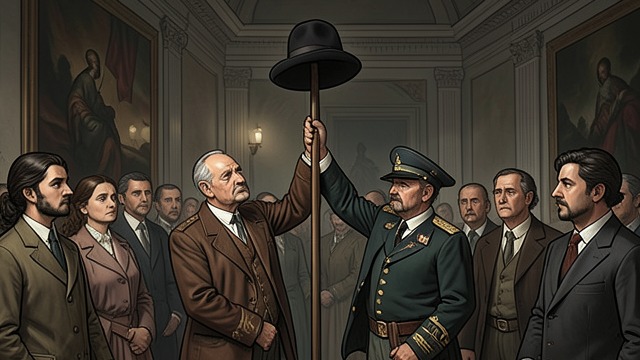
The Hat Raised
An imposed emblem
Hermann Gessler places his hat on a pole and commands the people to bow.
Object made political
An ordinary possession is transformed into a test of loyalty by the Governor’s decree.
Its authority depends on the people accepting the meaning he assigns it.
The People Evade It
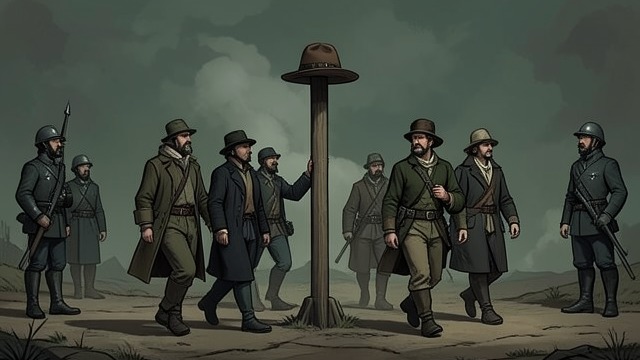
The People Evade It
Refusal without ceremony
The Swiss people walk around the meadow rather than bow to the hat.
A fragile command
The guards can watch the pole but cannot make people cross its path.
The object’s apparent authority proves dependent on routine compliance.
The Arrow Pierces the Emblem
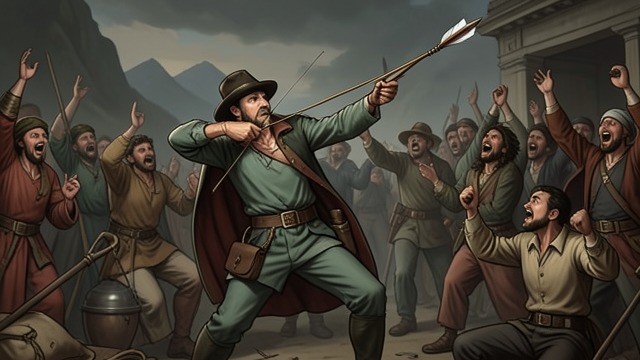
The Arrow Pierces the Emblem
Open defiance
William Tell shoots through the hat and pole after refusing to salute it.
A symbol damaged
The arrow physically marks the Governor’s emblem and makes the crowd’s rejection unmistakable.
The act does not yet end the regime, but it strips the decree of its aura.
The Pole Preserved
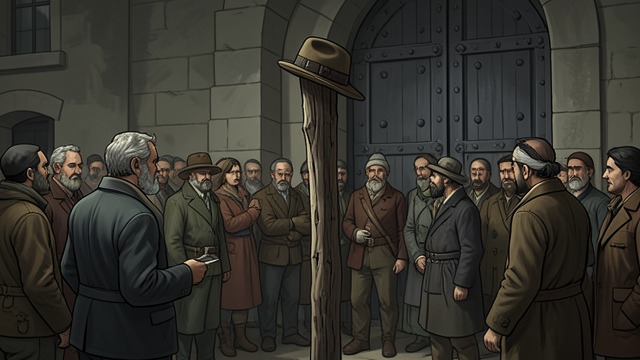
The Pole Preserved
Destruction considered
The people bring the hat and pole forward and propose burning them as signs of tyranny.
A new purpose
William Tell asks that the object remain, now marking where the revolution finished.
The community can reclaim a symbol by changing its use and interpretation.
Memory of Liberty
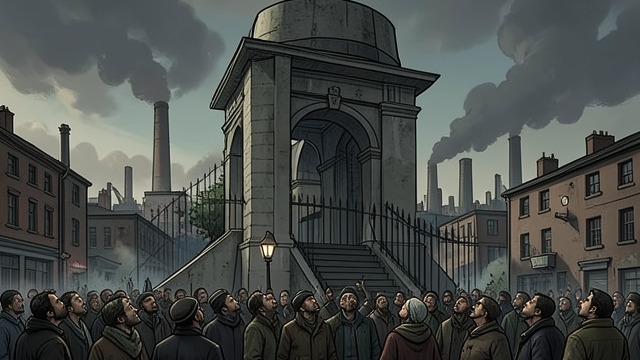
Memory of Liberty
A public memorial
The hat that once demanded submission is preserved to recall the people’s freedom.
History re-authored
The object no longer speaks for Hermann Gessler; it records the resistance that defeated his authority.
The ending makes memory part of political independence.
The day before Tell reaches town
The first day of the decree
During the confrontation in the meadow
After the fortresses fall
At the close of the uprising
